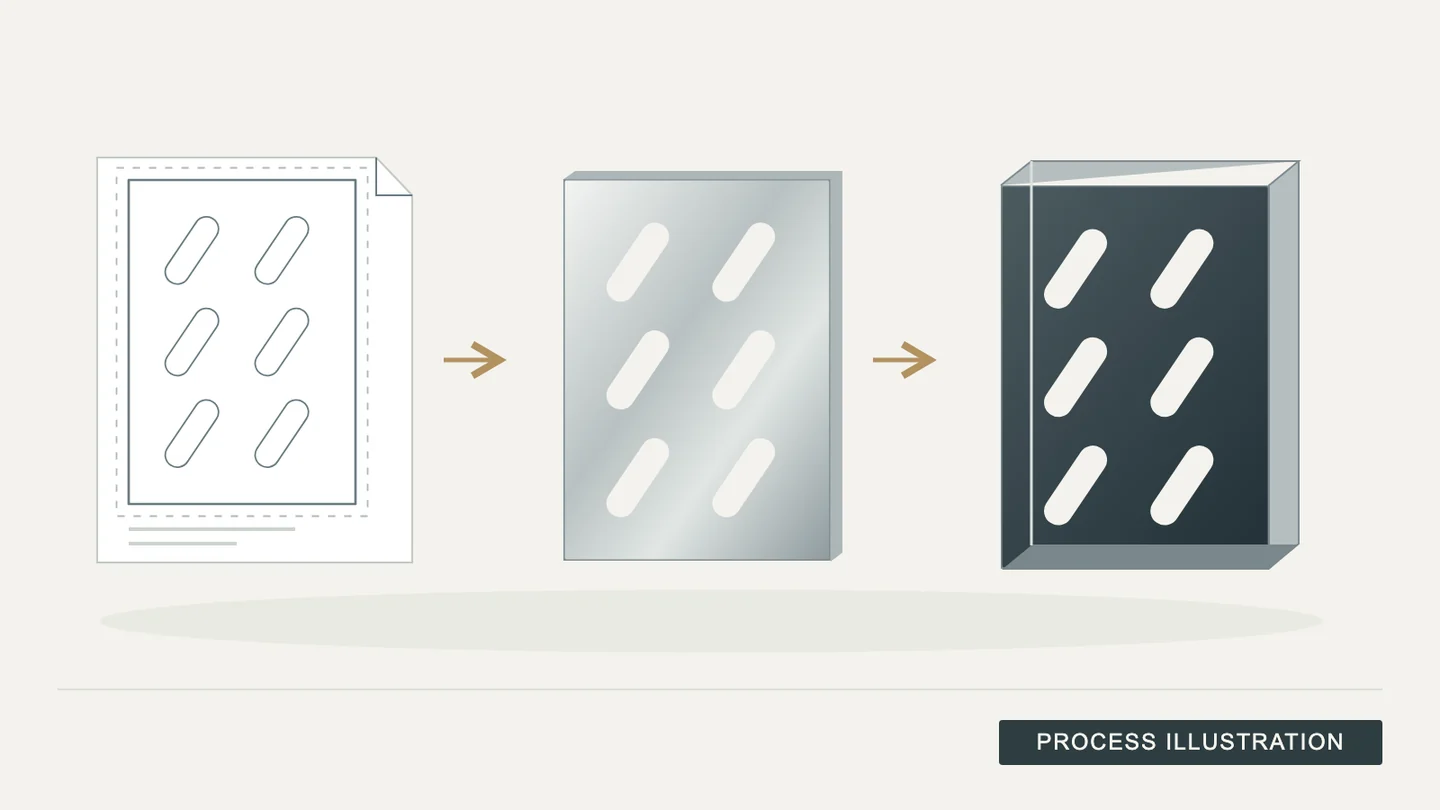
Two processes make most decorative aluminum panels: laser cutting and CNC punching. Both start from a flat sheet and a digital file. They work in very different ways, and each has a clear place.
This article explains the difference in plain terms. The points below are general industry knowledge. A specific workshop may have different limits, so confirm details with your supplier.
How each process works
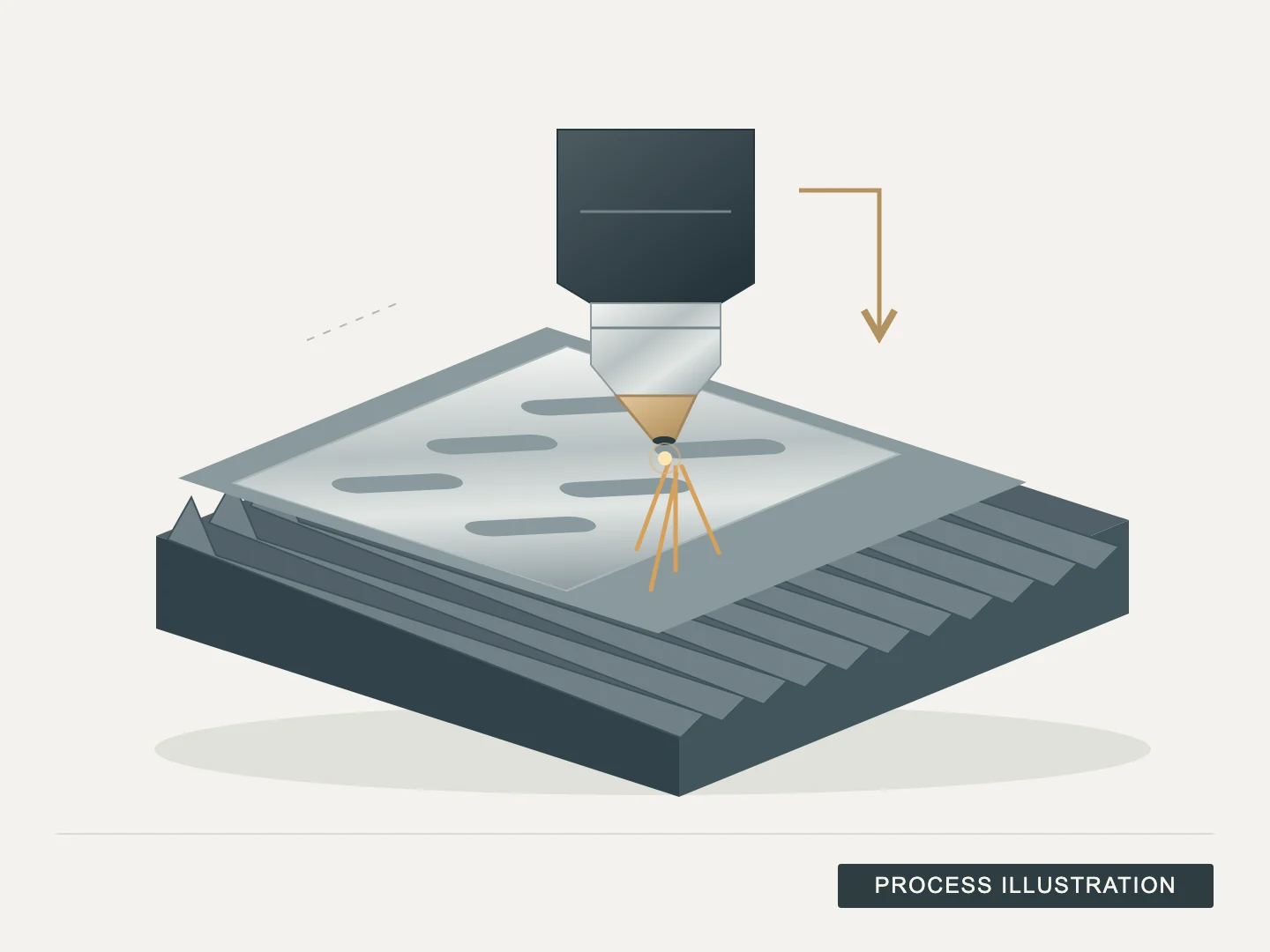
Laser cutting uses a focused beam to follow lines in a drawing. The beam melts or vaporises the metal along the path. Nothing touches the sheet, and any shape the file describes can be cut.
CNC punching uses a press with a set of tools. A tool in the shape of a round, square or slotted hole strikes the sheet and removes a piece. The machine moves the sheet and strikes again, building a pattern from many hits.
The main difference is simple. A laser draws a line. A punch stamps a shape.
Where laser cutting fits best
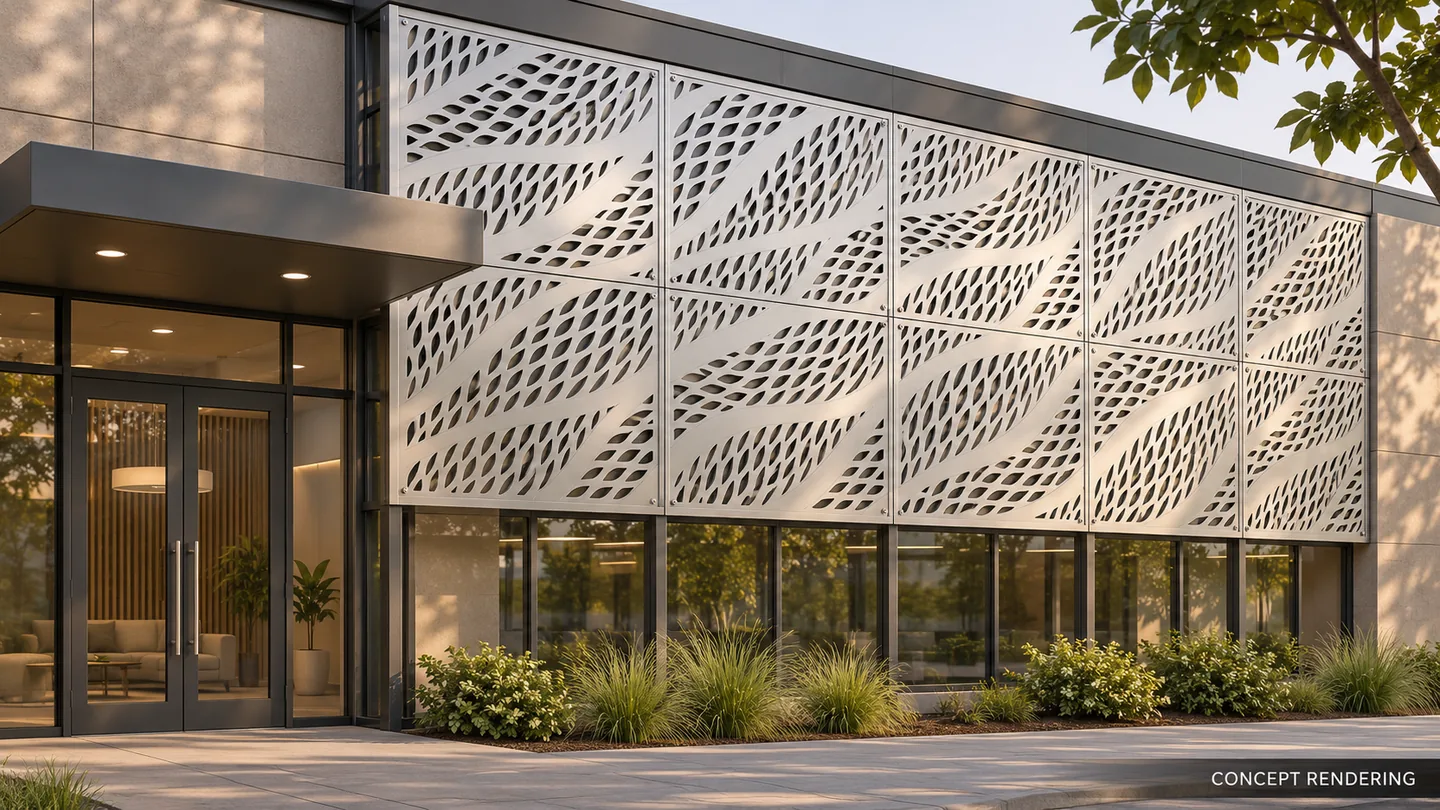
Laser cutting suits work where the design is the point of the product.
- Free-form patterns, such as florals, geometric designs and logos.
- Fine lines and small details.
- Designs that change often, because no new tool is needed.
- Smaller batches of many different panels.
- Panels where the outline is irregular, not a plain rectangle.
For gates, fence inserts, screens and feature walls, the pattern is often unique to the project. That is where lasers are commonly used.
Where CNC punching fits best
Punching suits work where one or a few shapes repeat many times.
- Perforated screens with round, square or slot holes in a regular grid.
- Larger quantities of the same pattern.
- Thinner sheet, where a punch goes through easily.
- Panels where speed on repeated holes matters.
Building facade screens and ventilation covers often use simple perforation. A grid of holes is what a punch does well.
Punching also leaves limits. The hole shapes are the shapes of the tools, and very small or very large holes may need special tooling. Thick sheet also needs more force, so a workshop may favour a laser above a certain thickness. The exact limit depends on the machine.
Edge and surface quality
The edge is where the two processes differ most.
A laser edge is usually clean and square. A thin heat-affected zone can form on the edge, and some dross may remain on the underside. Workshops normally clean it before finishing.
A punched edge is made by shearing. It can show a small burr on one side and some rounding on the other. Deburring is a normal step. Punching can also leave small tool marks and slight distortion around dense hole fields.
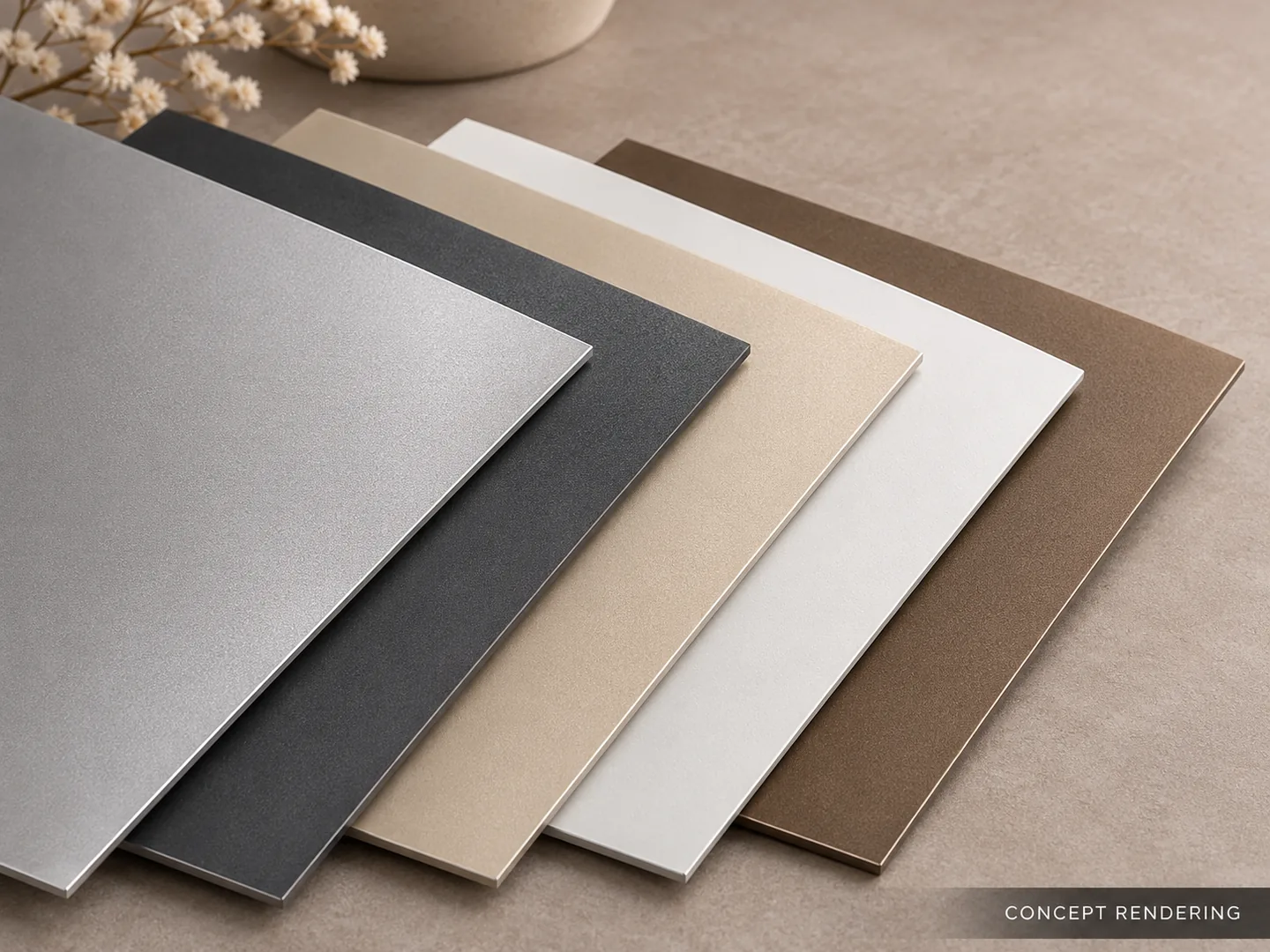
For a coated panel, both edges can be finished well. The question is what the buyer will see and touch. A railing panel touched daily needs a smoother edge than a high screen.
Flatness and distortion
Cutting a lot of metal out of a sheet can release stress and bend it. This is true for both processes.
A laser adds heat, so a dense, fine pattern can warp a thin sheet if the cut order is not planned. Punching applies force, so a dense hole field can stretch or curl the sheet. Panel thickness, alloy and the open area of the pattern all affect the result.
If flatness matters, tell the supplier. A framed panel, a thicker sheet or a flattening step can help.
Cost and quantity
Cost is not a fixed ranking. Three factors matter most.
- Tooling. Laser cutting needs no tool for each shape. Punching uses a tool library, and a special shape may need a new tool.
- Cut length and hits. A laser is charged by path length and time. A punch is charged by the number of hits. A pattern of many tiny holes can favour one or the other.
- Quantity. Repeated work can lower the cost per panel in both processes, but not in the same way.
Because of this, the same pattern can be cheaper by laser in one case and by punching in another. Ask for the reason behind a quote, not only the number.
How to choose
Ask these questions in order:
- Is the pattern free-form or made of repeated simple shapes?
- What is the sheet thickness and alloy?
- How many panels do you need, and will the design change?
- How important is the edge look and the flatness?
- What finish follows, such as powder coating or anodizing?
If the answers point to a custom pattern, fine detail or a small run, laser cutting is the usual choice. If they point to a regular perforation in volume, punching is worth quoting.
Do not choose by price alone. A cheaper process that cannot hold your pattern will cost more in the end.
What to send in your quote request
A supplier can compare both processes if you give complete information.
- The drawing file in DXF, at 1:1 scale, and the unit.
- Panel size, sheet thickness and alloy, or the use if you need advice.
- Quantity for the first order and likely repeat quantity.
- Whether the design may change between orders.
- Edge and flatness requirements.
- Finish and colour.
- Destination country.
Ask the supplier which process they propose, and why. A clear answer is a good sign.